


Heroes Amid the Tremors: Kamchatka Surgeons Save Patient During Violent Earthquake
- Редакция «Сегодня в эфире»
- Jul 30, 2025
- 2 min read

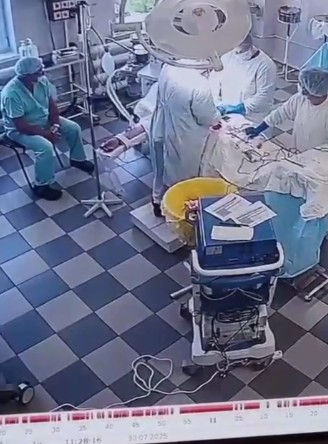
In a moment that has captured hearts across Russia, medical staff at the Kamchatka Regional Cancer Center demonstrated extraordinary bravery and composure, continuing life-saving surgery as a powerful earthquake shook the region on July 30.
As the seismic waves from an undersea quake rattled Petropavlovsk-Kamchatsky, dramatic video footage — shared by Kamchatka’s health minister Oleg Melnikov — showed surgeons in the midst of a complex laparotomy, refusing to abandon their patient despite chaos erupting all around them.
With medical equipment shaking, one staff member held a monitor in place, while a nurse steadied the instrument table. At one point, the clatter of falling metal could be heard as a tray hit the floor.
Health Minister Melnikov praised the team as “heroes in white coats,” emphasizing their remarkable professionalism and courage. “Despite the danger, the doctors remained calm and never left the patient’s side. The patient is now stable and recovering well,” he said, thanking the staff for their resilience under pressure.
Kamchatka Governor Vladimir Solodov called for the medical workers to be nominated for national honors, hailing their courage during a government meeting.
“I want to thank the team for their bravery and professionalism. We saw firsthand how, even as tremors struck, they continued caring for their patient with unwavering calm,” he said, instructing regional officials to prepare the paperwork for their official recognition.
Dr. Yana Gvozdeva, head of the surgical department at the cancer center, told Russian media that stopping the procedure was never an option.
“It was an open abdominal surgery — we couldn’t let the patient regain consciousness. Our main concern was making sure the operating table didn’t tip over and the patient didn’t fall,” she explained.
“It was terrifying; the consequences would have been catastrophic if she had fallen. Thankfully, the patient is now in intensive care and her condition is stable.”
Gvozdeva described the earthquake as the strongest she had ever experienced: “It shook non-stop for five or six minutes, sometimes more violently, sometimes less. We had no idea what would happen next.”
News of the upcoming honors for her and her colleagues came as a complete surprise, she added. “Duty comes first. No amount of shaking — whether the ground or the equipment —could stop us from doing our job,” she said.
In a region accustomed to the forces of nature, the staff’s unwavering commitment in the face of disaster stands as a testament to the spirit and professionalism of Kamchatka’s medical community.


