


Declassified Report Rekindles Debate Over 2016 Russia Election Assessment
- Редакция «Сегодня в эфире»
- Jul 24, 2025
- 2 min read

Updated: Jul 25, 2025
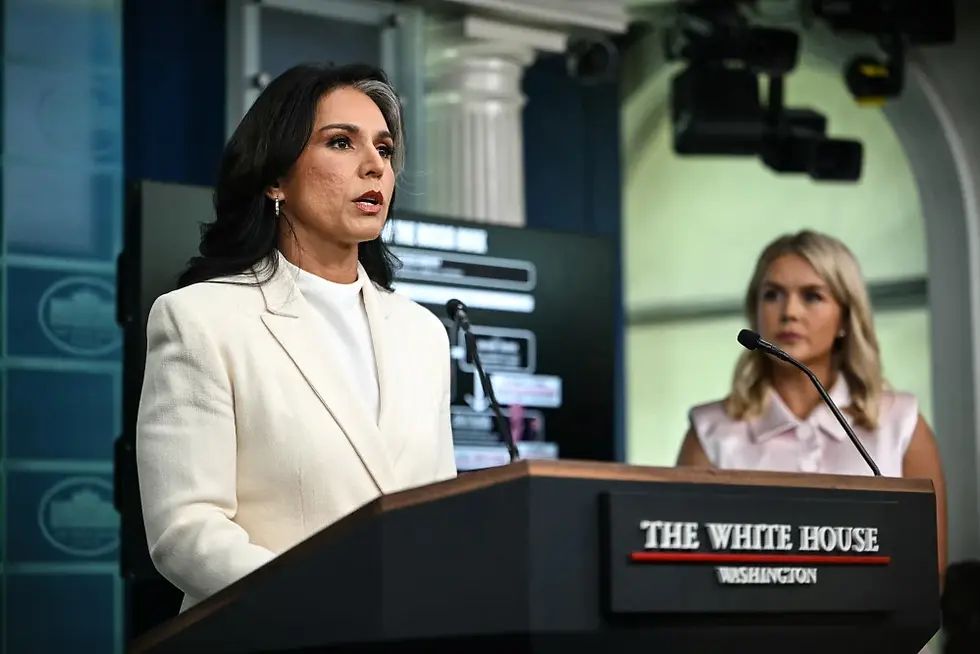
A recently declassified congressional report has brought renewed attention to the long-standing debate over Russian interference in the 2016 U.S. presidential election.
Director of National Intelligence Tulsi Gabbard released the redacted document, which was originally produced by House Republicans during former President Donald Trump’s first term, claiming it provides further evidence that the intelligence community’s assessment on Russian interference was “manufactured.”
The declassification came shortly after Trump publicly accused his predecessor, Barack Obama, of treason regarding the intelligence community’s 2017 assessment.
That assessment concluded that Russia had interfered in the 2016 election with the intention of aiding Trump’s campaign. However, the newly released House report and a recent review by CIA Director John Ratcliffe both stop short of supporting claims that the assessment was deliberately falsified.
According to the report, the intelligence finding that Russian President Vladimir Putin aspired to help Trump was based on limited and sometimes uncorroborated sources. While the report questions the analytic methods and the weight given to certain intelligence streams, it does not claim the conclusions were fabricated.
Ratcliffe’s review also noted disagreements over the level of confidence in specific judgments but ultimately described the overall assessment as “defensible.”
The release of the report has sparked criticism from intelligence officials and Democratic lawmakers, who argue that making such sensitive information public could compromise sources and methods, as well as damage trust among international partners. Some officials expressed concern that the disclosure happened before all proposed redactions were finalized.
Supporters of the release, including some Trump administration allies, argue that greater transparency is needed in intelligence processes, especially regarding matters of national importance.
However, no formal accusations of wrongdoing have been brought against officials involved in the 2017 assessment. Independent and bipartisan reviews have consistently found that the intelligence community had reasonable grounds for its conclusions about Russian interference.
The report’s release reflects the ongoing partisan divide over the interpretation of intelligence on foreign election meddling, as well as broader debates about transparency, national security, and the public’s right to know.


