


Trump softened his tone toward China but appeared to win no visible concessions from Xi
- May 15
- 3 min read
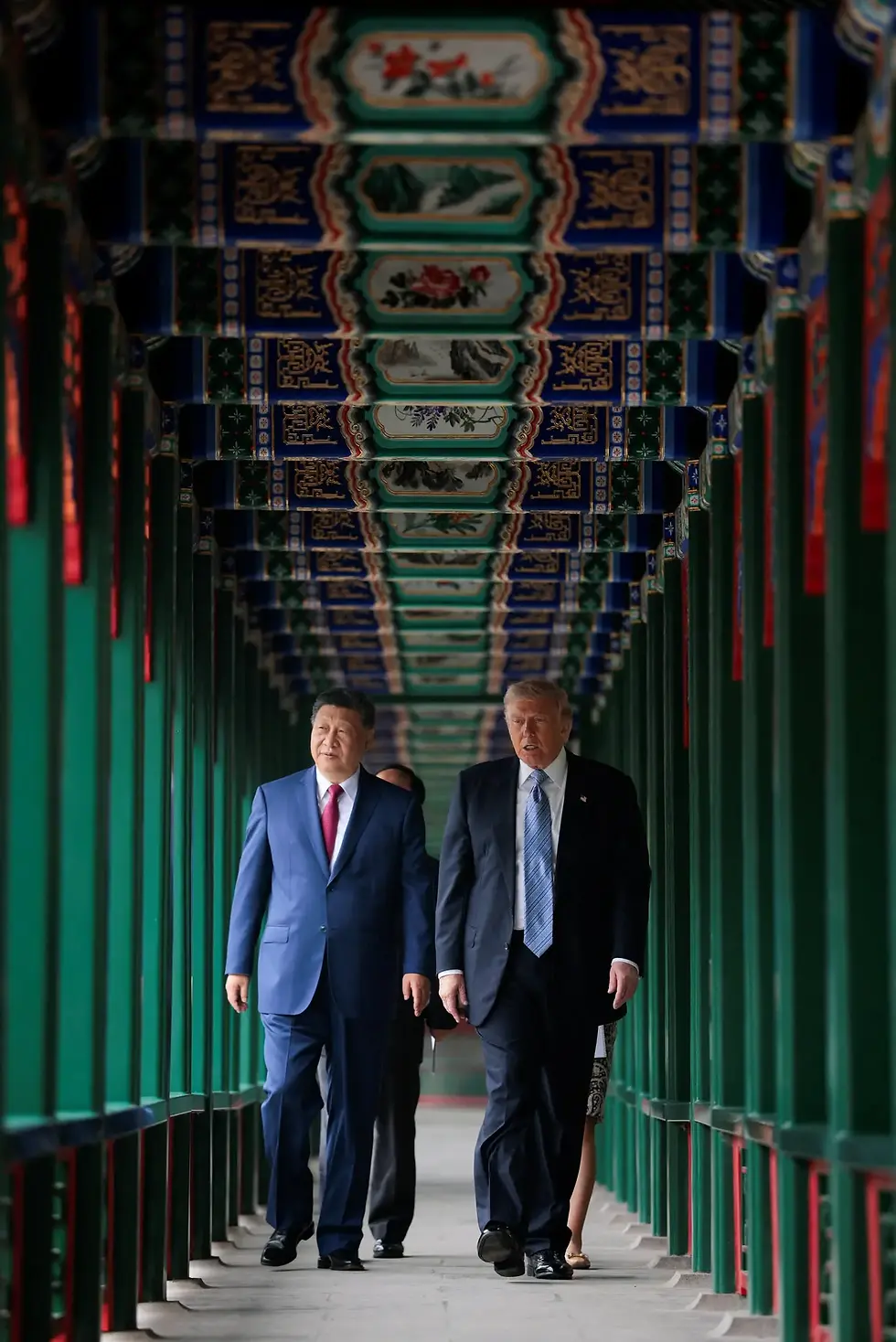
President Trump left Beijing on Friday after a two-day summit with Xi Jinping that showed a sharp change in his approach to China, but offered little clarity about what the two leaders had actually agreed on.
The visit capped a dramatic reversal. In 2024, Trump said China was “killing us as a country.” During his second term, he pushed tariffs on Chinese goods as high as 145 percent.
Now, after China’s retaliation and last year’s retreat from the trade war, Trump has moved away from the confrontational policy that shaped his first years in office, the Biden administration and the start of his own second term.
In Beijing, Trump praised Xi as a “great leader”, toasted the “special relationship” between Americans and Chinese people and brought a group of major U.S. executives to meet the Chinese leader. He told Xi that they had come “to pay respects to you, China.”
The summit’s public tone was warm, but the substance remained thin. Trump said China would buy Boeing planes and soybeans, yet his account came only from comments to reporters aboard Air Force One. Xi’s government did not confirm the purchases.
Taiwan remained the most sensitive issue. Xi warned that disagreement over the self-governing democracy could lead to a “clash.”
Trump did not raise Taiwan publicly while in Beijing. Later, on Air Force One, he said Xi had asked whether the United States would defend Taiwan if China attacked. Trump said he did not answer directly: “I don’t talk about those things.”
Trump also suggested he might reconsider a $14 billion arms package for Taiwan that is awaiting his approval. Asked about Ronald Reagan’s long-standing assurance that U.S. presidents would not consult Beijing on Taiwan arms sales, Trump dismissed it as something from a different era.
Iran was another unresolved point.
Trump said he and Xi “feel very similar” about the issue, but China’s Foreign Ministry repeated that the war “should not have happened in the first place.” Beijing called for Middle East shipping lanes to reopen, but did not signal new pressure on Iran, which remains heavily dependent on China as its main oil buyer.
For Beijing, the visit appeared to be a diplomatic success. Xi spent unusual amounts of time with Trump, accompanied him at public events and presented a new formula for U.S.-China ties: “constructive strategic stability.”
Chinese state media amplified Trump’s praise, turning the visit into a message that relations with Washington were improving.
John Delury, an East Asia historian and senior fellow at the Asia Society, said the summit could still shift the geopolitical mood even without major agreements.
His point was simple: “You don’t pack Air Force One with your biggest business leaders when you’re decoupling.”
Some former U.S. officials saw danger in Trump’s approach. Nicholas Burns, who served as U.S. ambassador to China under President Biden, said Trump’s overly flattering tone “weakens Trump and the U.S.”
Burns added that Xi had not hesitated to warn Trump over Taiwan, and that Trump should have been just as direct about American concerns.
Chinese analysts also noticed the imbalance. Da Wei, director of the Center for International Security and Strategy at Tsinghua University, said the U.S. side looked “a little passive,” while China had prepared carefully.
The larger question is how long the friendly mood can last. Trump began his first term with a cordial Beijing summit in 2017, then turned sharply against China.
This time, analysts said, his calculation may be different. China showed last year that it could retaliate against U.S. pressure, especially through rare earth exports.
“Everyone has a learning curve,” said Sun Chenghao, a specialist in U.S.-China relations at Tsinghua University. Now, he said, “Mr. Trump knows how to deal with China.”


